SF series · Natural fibre
Coir fibre, yarn & rope — India export.
Buyers Googling brown coir fibre exporter India or coir yarn wholesale usually work in weight and container economics — not piece counts. Blossom Valley supports merchant-export programmes for coconut coir fibre, spun yarn, and rope used across packaging, erosion-control supply chains, and horticulture manufacturing.
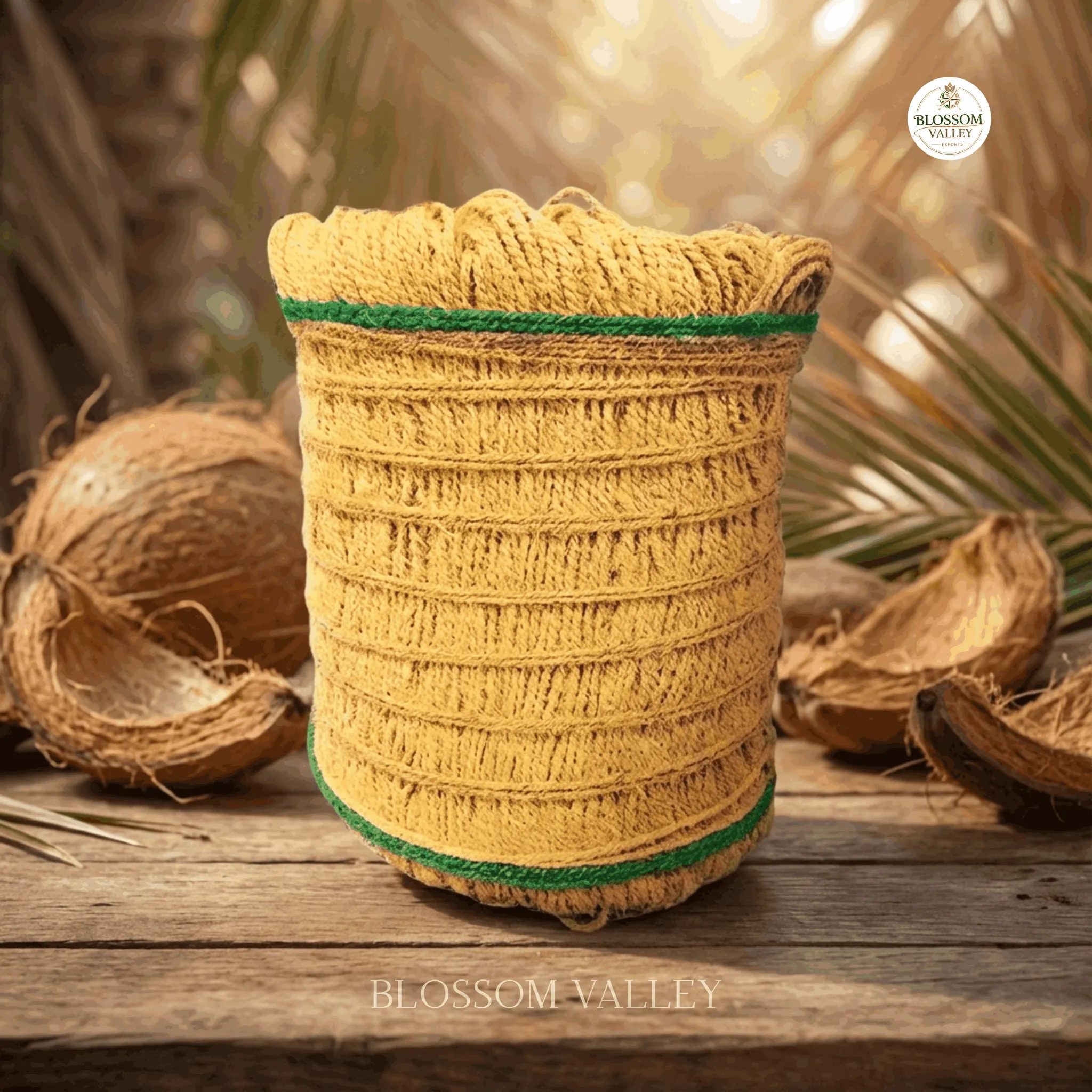
- Roll32 ft / 30 kg (SF-1)
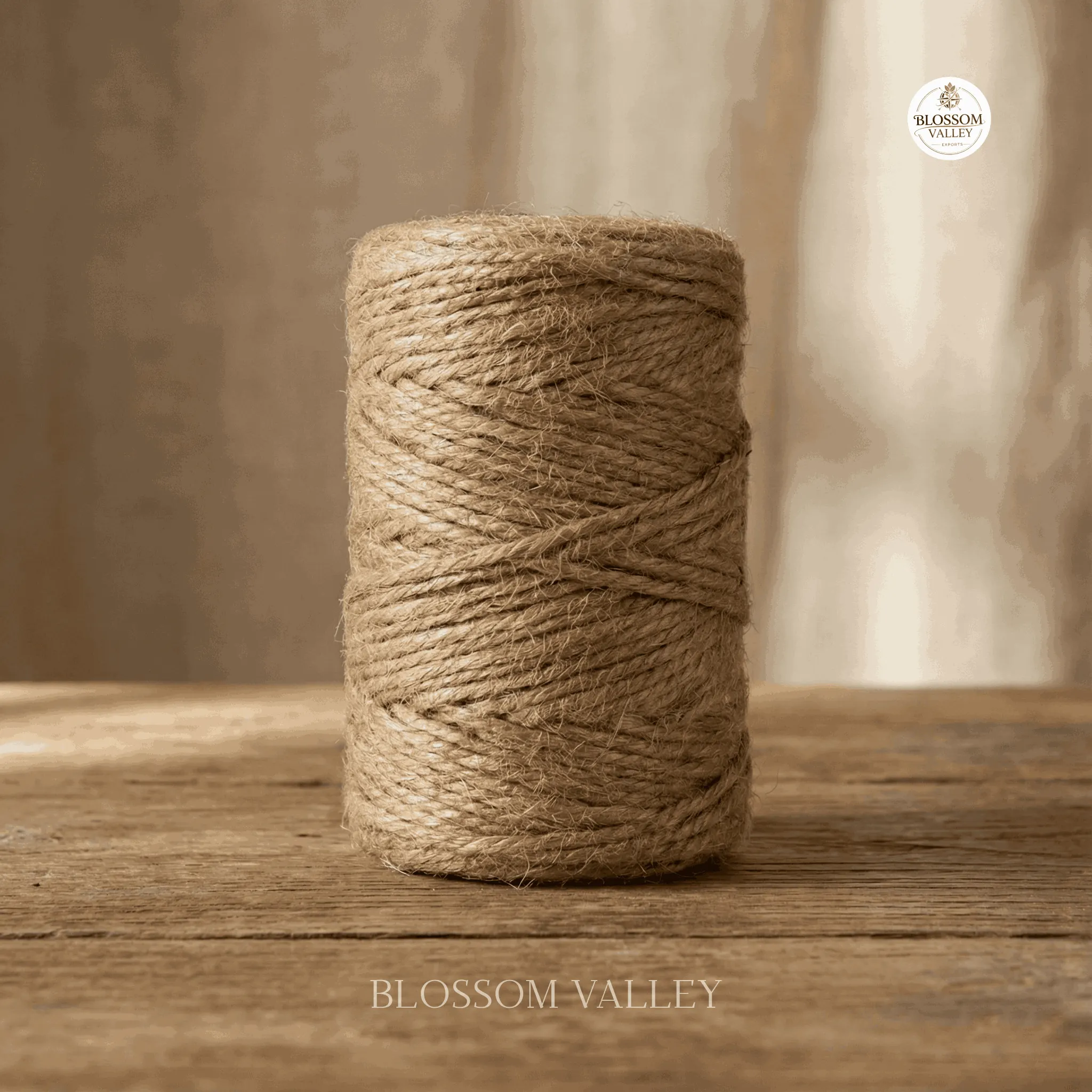
- Yarn MOQ2,000 kg (SF-2)
- Moisture~15%
- ChannelsPackaging · erosion · cordage
What the SF programme delivers
Industrial fibre — weighed, washed, and worth sourcing from India.
Programmes are tonne-led, not piece-led. We talk in mill runs, container fills, and customs-ready paperwork.
Tonne-based programmes
Yarn typically quoted from 2,000 kg up; bristle fibre and rope sized to mill run lengths.
Documented spec
Moisture (~15%), impurity (~3%), twist, and length declared per SKU — not photographed and forgotten.
Natural fibre origin
Brown fibre from mature coconuts; renewable, biodegradable, and naturally pest-resistant.
Customs-ready paperwork
Phytosanitary / fumigation letters where the destination requires them — discussed up front.
Featured SF SKUs
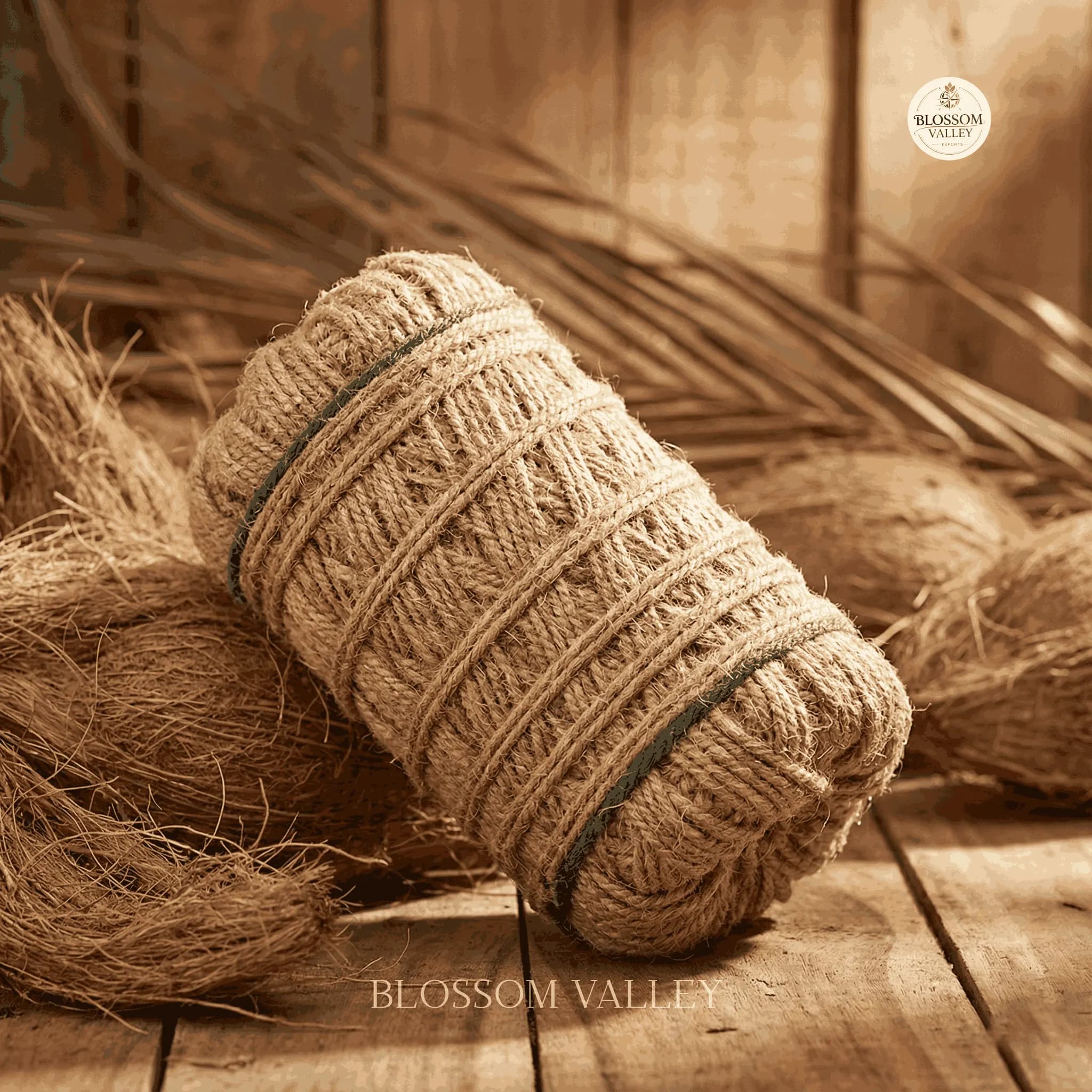
Coir fibre rolls, spun yarn, and natural rope.
Three SF rows that anchor the fibre programme — open any for moisture, weight, and use-case detail.
Documentation matters
What importers expect on every SF shipment.
Declare target moisture, impurity tolerance, and whether customs needs phytosanitary treatment letters or fumigation. Fibre grades impact both price and handling — photos without lab context rarely substitute for signed specs.
Many erosion-control and packaging buyers also need a certificate of origin and invoice formatting that lines up with their broker's electronic filing. Tell us the format your customs filing uses and we will produce paperwork that does not trigger reviews at landing.
Quick facts
- Code family
- SF-1 fibre · SF-2 yarn · SF-3 rope
- Material
- Brown coconut coir; rope blends natural jute
- Channels
- Packaging · cordage · erosion · horticulture mfg.
- Volume band
- From mill run lengths to multi-FCL programmes
- Documentation
- Invoice · PL · BL · COO · phyto / fumigation
Brief the desk
What industrial buyers should attach.
SF programmes are sized by tonnage and tolerance — the more both are declared up front, the faster the mill is scheduled.
Tonnage & containers
Annual tonnage and the LCL-or-FCL test you want to run first.
Spec & quality cert
Moisture and impurity bands plus the certificate format your QC team needs.
Use case & trade context
Industry (packaging / erosion / cordage / horticulture), destination, and Incoterms.
Related export hubs
Pair fibre with geotextile, pots, and media.
Civil and industrial buyers often mix SF fibre with VE woven geotextile or SR pots when a project demands one consolidated India-origin paperwork bundle.
- VE
Geotextile & nursery pots
Woven coir mat (700 g/m²) and specialty nursery pots — civil and orchid lanes.
Open hub - SR
Coir pots & growers
Pressed coir pots and propagation liners — companion lanes that share fibre origin.
Open hub - SR
Cocopeat & coco chips
Compressed coco pith bricks, blocks, and chip media for retail and growers.
Open hub Coir export hub
Every coir lane on one page — pots, media, HDPE bags, fibre, geotextile.
Open hub
Frequently asked questions
Which industries import coir fibre and rope from India?
Common destinations include horticulture supply, handicrafts, packaging manufacturers, erosion-control installers, and general cordage distributors — each with different twist, moisture, and impurity tolerances we document at quoting.
How do MOQs differ between yarn reels and bristle fibre?
MOQs track weight, containerisation, and mill run lengths. Heavy industrial buyers often work in tonnes (yarn MOQs around 2,000 kg are typical); specialty craft buyers may consolidate via distributors for smaller pilot loads.
Can we get trial lots before contract tonnage?
Pilot shipments depend on the product form, mill schedule, and current run length. State the test quantity, intended end-use, and the quality certificate format you need so the right mill is scheduled.
What moisture and impurity tolerances should I declare?
Brown fibre typically ships around 15% moisture with around 3% impurities; declare your acceptable tolerance band so customs and your QC team are aligned on the spec quoted.
Can phytosanitary or fumigation certificates be included?
Yes — destinations enforcing plant-health rules receive phytosanitary documentation alongside invoice, packing list, BL, and certificate of origin. Share your broker's checklist early so paperwork accompanies the first shipment.
What catalogue codes map to this hub?
SF-series codes (SF-1, SF-2, SF-3) cover coir fibre rolls, coir yarn, and natural fibre rope. Each row carries dimensional, weight, and use-case notes in the main coir catalogue.
Prefer to write directly?
Skip the cart and reach the fibre desk
Useful for tonne-based programmes, mill-run scheduling, or phyto / fumigation paperwork questions.