Sustainable lanes · India export
Eco-friendly export programmes from India.
Sustainability positioning is only credible when supply chains are transparent. Blossom Valley foregrounds natural, plant-based lanes: coconut coir for horticulture, and areca palm leaf for compostable foodservice disposables. Both are merchant-export categories with wholesale economics. Our equestrian wholesale lane serves tack and companion-pet buyers under separate material and compliance discussions.
- Active lanesCoir · Areca · Equestrian
- SKU pool56+ live codes
- OriginChennai, Tamil Nadu
- ModelMerchant export · MOQ-disciplined
What the eco programme delivers
Plant-based wholesale lanes with honest documentation.
A single India export desk handles compostable horticulture, foodservice tableware, and a wholesale equestrian programme — with the audit paperwork to match.
Plant-based
Coconut coir and areca palm-leaf — naturally fallen, no tree harvested.
Compostable
Industrial- or home-compostable claims supported with jurisdiction-specific wording.
Documentation honesty
Spec sheets, mill certificates, INCO terms aligned with retailer audit standards.
One export desk
Coir, areca, and equestrian programmes consolidated under one merchant-export operation.
Three lanes, one export desk
Where each lane fits a sustainability assortment.
Many importers serve garden centres and hospitality under one roof; some also stock tack and pet retail. You can shortlist across coir and areca, then discuss equestrian as a separate documentation lane.
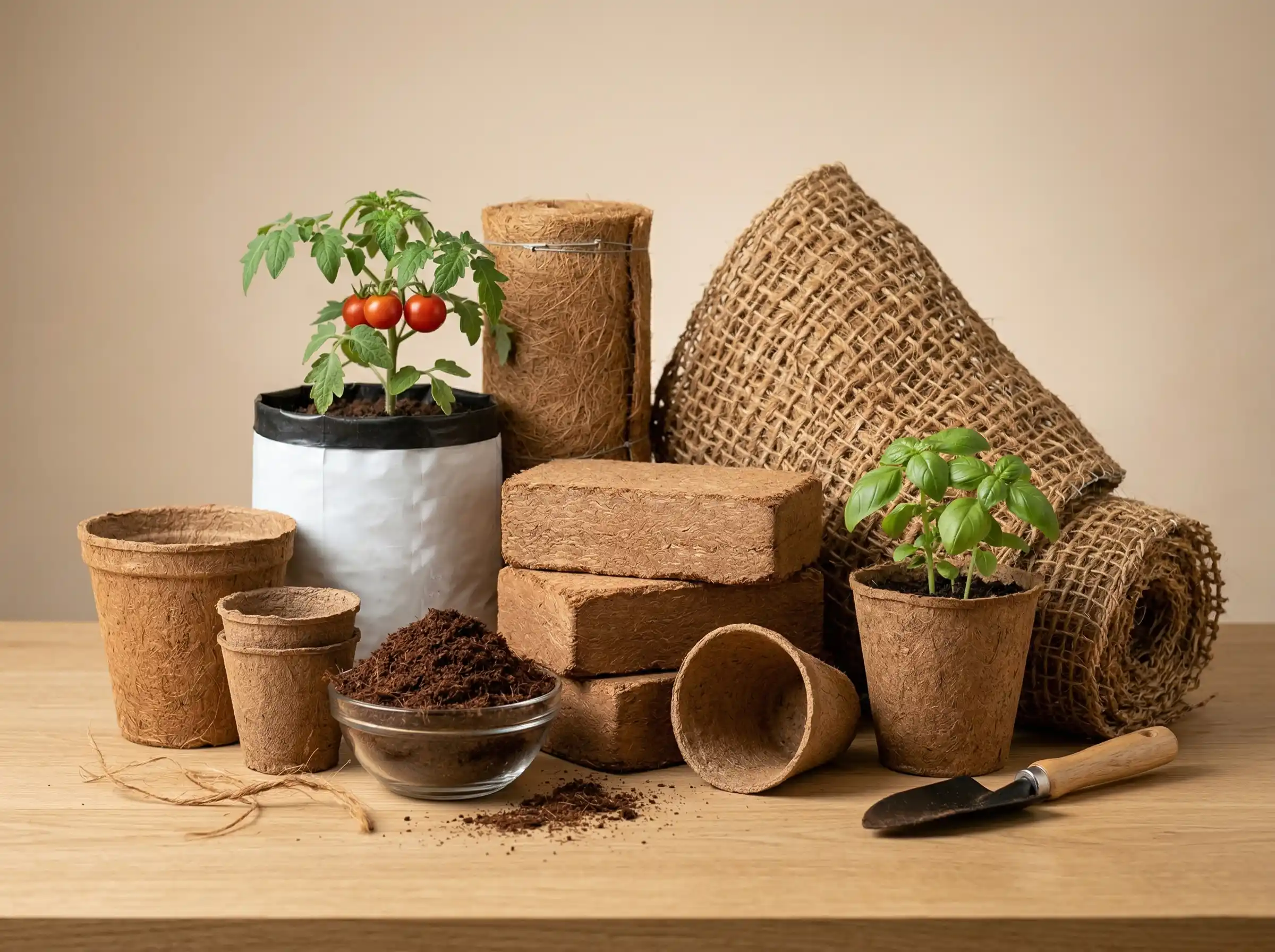 Lane 01 · Horticulture
Coconut coir for garden centres and growers.
Coir pots, hanging baskets, cocopeat blocks, grow slabs, HDPE bags, fibre rope, geotextile — plant-based substrate that replaces plastic in nursery and erosion contexts.
- Pots & growers (SR series)
- Cocopeat & coco chips (SR-18..23)
- Grow slabs · HDPE bags · fibre rope
- Geotextile & nursery liners (VE series)
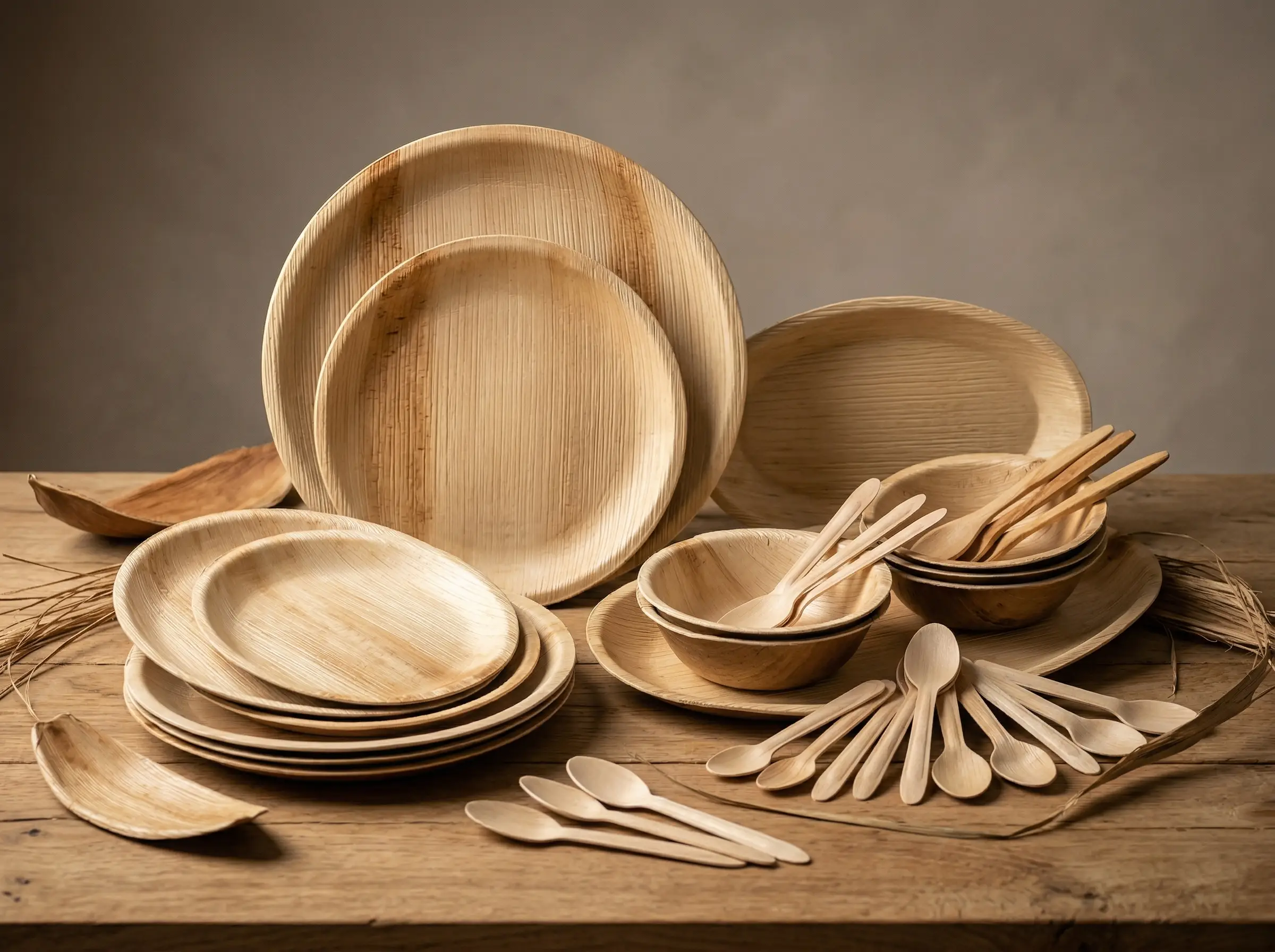 Lane 02 · Foodservice
Areca palm-leaf compostable tableware.
Heat-pressed plates, bowls, platters, trays, and spoons — naturally fallen sheath with no synthetic coating. The most defensible compostable substrate for foodservice and retail.
- Plates · bowls · platters · trays · cutlery
- AL · EN · NL article series
- Heat-pressed; no coating applied
- QSR · garden centre · festival · hospitality
 Lane 03 · Equestrian & pet
Wholesale equestrian and companion-pet lines.
Halters, bridles, training kit, girths, lunging, dog collars and leads. A distinct lane with leather and webbing — material honesty kept separate from the compostable story.
- Twenty importer-ready categories
- Leather · webbing · rope · neoprene
- Brass · stainless · nickel hardware
- Private-label and OEM-friendly
Plan a dual- or tri-category import
Make a single container do the work of three.
Coir and areca commonly share containers — both are plant-based, both ship at similar densities, and both serve consumer-facing sustainability stories. A typical combined load mixes nursery substrate (cocopeat, pots, baskets) with foodservice tableware (plates, bowls, trays) under one MOQ envelope.
Equestrian and companion-pet items use a separate documentation track because leather and webbing have distinct claim profiles. We still operate them through the same export desk so paperwork, INCO terms, and forwarder briefs stay aligned.
Bring your retail copy and audit standards early. We will tell you exactly which certifications, sub-claims, and labelling phrasing are defensible per SKU — and which need either a different shape, a different substrate, or softer wording.
Quick facts
- Active lanes
- Coir · Areca · Equestrian (separate documentation)
- Live SKU pool
- 56+ codes — coir & areca live; equestrian pre-launch
- Compostable claims
- Industrial & home; jurisdiction-specific wording recommended
- Channels served
- Garden centre · QSR · grocery · hospitality · pet retail · tack chain
- Origin
- Chennai, Tamil Nadu, India
Brief the desk
What every sustainability programme RFQ should attach.
Sustainability supply chains move faster when narrative, audits, and logistics travel together up front.
Retail narrative
Marketing claims you want to support so material wording and certificates align.
Audit standards
FSC, Sedex, BSCI, or retailer-specific audits required for landing.
Logistics
Destination port, INCO term, peak window cut-offs, and HS-code preferences.
Related export hubs
Drill into a specific lane or sub-hub.
Each lane has its own SEO hub for buyers with a single-category brief. Use these to share the right deep-link with your procurement team.
- SR
Coir pots & growers
Round, square, hanging — biodegradable pots for nursery retail.
Open hub - SR
Hanging baskets & liners
Wire-framed baskets and pre-cut liners for outdoor planters.
Open hub - SR
Cocopeat & coco chips
Bricks, blocks, and chips — washed and unwashed grow media.
Open hub - SF
Coir fibre & rope
Industrial fibre, twisted rope, mattress yarn for civil uses.
Open hub - AL
Areca plates
Round, square, compartment, and boat plates from AL series.
Open hub - AL
Areca bowls
Deep square, round, and specialty bowls for grain bowls and curries.
Open hub - NL
Palm-leaf cutlery
Compostable spoons pair with the rest of the eco kit.
Open hub Full catalogue hub
All three lanes in one view — coir, areca, equestrian.
Open hub
Frequently asked questions
What makes Blossom Valley an eco-friendly exporter from India?
We focus merchandising on plant-based coir horticulture goods (cocopeat, fibre, geotextile, pots) and compostable areca palm-leaf tableware — categories that replace plastic in garden and foodservice channels. Both lanes ride on transparent B2B documentation with realistic claim wording.
Can sustainable imports include equestrian leather goods?
Leather has different sustainability claims than fibre tableware or coir horticulture. We position equestrian as a distinct wholesale lane with material honesty in every RFQ — same export desk, different documentation stream.
Do you provide lifecycle or composting certificates?
Provide the exact standard your retailer expects (TUV / BPI / OK Compost / regional equivalents); we map available mill certificates to your SKU list during quoting. Some shapes are jurisdiction-specific — we will tell you what is verifiable today versus aspirational.
How do buyers avoid greenwashing accusations?
Stick to spec-sheet language, cite genuine certifications, and separate marketing slides from customs paperwork. Our team prefers conservative wording — 'plant-based, compostable in industrial systems' is defensible; 'eco-perfect, zero-waste' is not. Bring your retail copy early and we will flag claims that need substantiation.
Can I source coir, areca, and equestrian on one shipment?
Coir and areca often share containers because both ship as compostable plant-based goods. Equestrian leather and webbing typically ride separately for documentation reasons — but the same forwarder can consolidate at port if your INCO term allows. Discuss lanes early so packing assumptions match.
What documentation does an eco-friendly RFQ benefit from?
Destination port, INCO term, retailer audit standards (FSC, Sedex, BSCI as relevant), HS-code preferences, and any labelling rules unique to your market. The more upstream context, the fewer surprises at landing.
Prefer to write directly?
Skip the cart and reach the cross-lane desk
Useful for tri-category container planning, retailer audit alignment, or claim-wording reviews before launch.